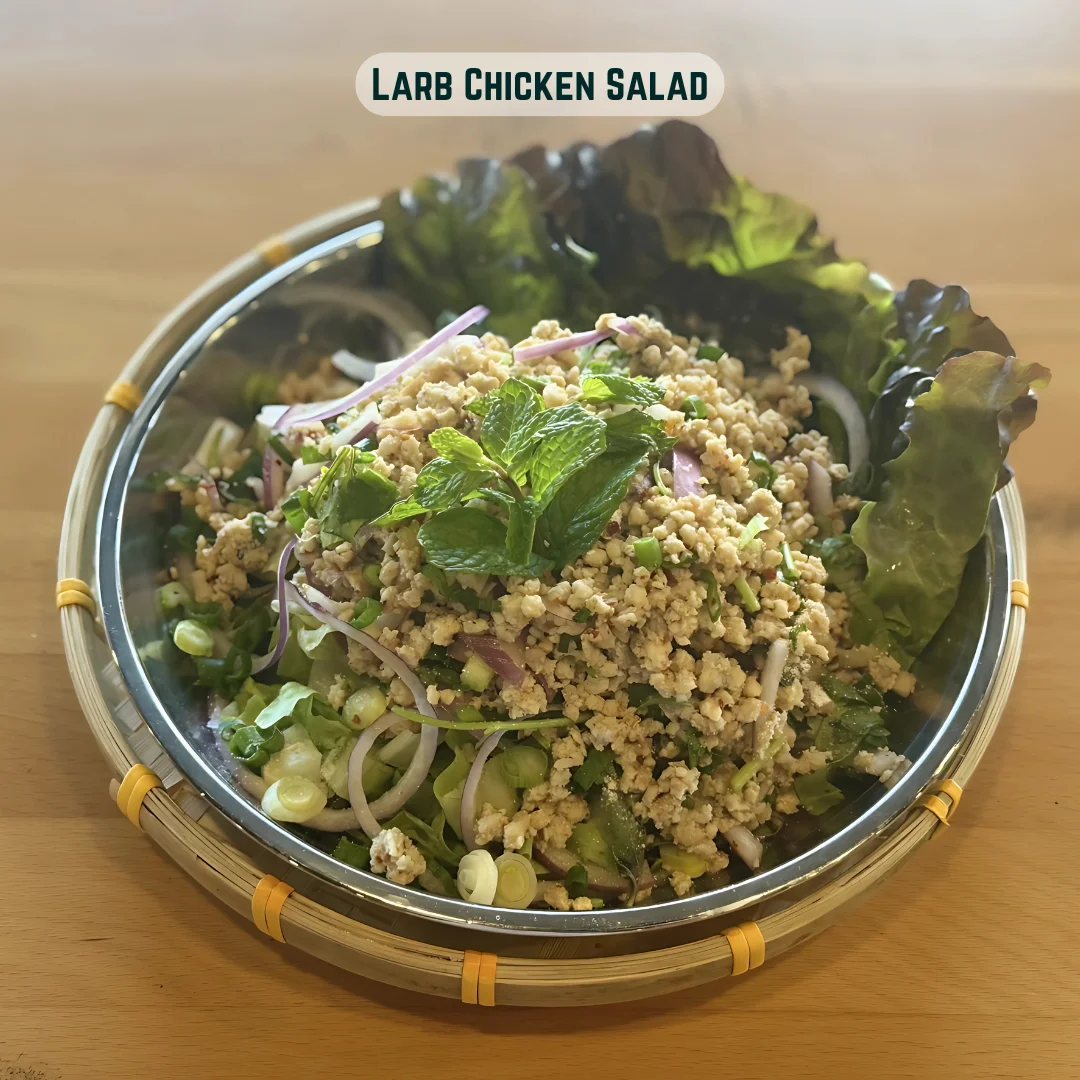
If you have ever scanned a Southeast Asian menu and paused at larb, you are not alone. A lot of diners ask, what is larb dish, and the short answer is that it is one of the most loved foods in Lao cooking - a bright, savory minced meat salad layered with lime, herbs, chilies, and toasted rice powder.
That quick definition helps, but larb is more than a simple salad. It carries a lot of identity with it. In Lao food, larb is a dish people know from home tables, celebrations, and everyday meals. It is deeply flavorful, easy to share, and memorable from the first bite because it balances freshness, heat, savoriness, and texture all at once.
What Is Larb Dish in Lao Cuisine?
Larb, sometimes spelled laab or laap, is a Lao dish traditionally made with minced meat, fresh herbs, lime juice, fish sauce, chilies, and ground toasted rice. The result is not saucy like a curry and not leafy like an American salad. It is closer to a seasoned meat dish that happens to be built around herbs and brightness.
The toasted rice powder matters more than many first-time diners expect. It gives larb a lightly nutty aroma and a gentle grainy texture that makes the dish feel distinct. Without it, you would still have seasoned minced meat with herbs, but you would miss one of the details that gives larb its signature character.
Larb is strongly associated with Laos, though versions also appear across the region, especially in northeastern Thailand, where food traditions overlap with Lao cuisine. That is why you may see different spellings, ingredient choices, or heat levels depending on the kitchen. The heart of the dish stays the same: chopped or minced protein seasoned with intense, fresh flavors.
What Makes Larb Taste So Different?
A lot of dishes are spicy or herby. Larb stands out because it is built on contrast. The meat brings richness, lime adds sharpness, fish sauce brings salt and depth, herbs keep it fresh, and toasted rice powder ties everything together with texture.
Mint is often one of the first flavors people notice. It gives larb a cooling edge that plays against the chilies. Cilantro, scallions, and sometimes shallots add more lift and crunch. In some versions, the dish is more tart. In others, it leans spicier or more savory. That depends on the recipe, the region, and who is cooking.
This is also why larb can surprise people who expect something heavy. Even when it is made with beef, pork, or chicken, it often eats lighter than a stir-fry because there is no thick sauce coating everything. It feels vivid and direct.
Is Larb a Salad, a Meat Dish, or an Appetizer?
The honest answer is that it depends on how you eat it.
Larb is often described as a salad because it includes herbs, lime, and fresh aromatics rather than a cooked sauce. But for many diners, it reads more like a minced meat dish served with vegetables, sticky rice, or lettuce for wrapping. It can be an appetizer to share, but it can also be a full meal, especially when served with rice and sides.
That flexibility is part of why larb works so well in a casual restaurant setting. It fits the diner who wants something vibrant and lighter, and it also fits the table ordering several dishes to share. You can pair it with sticky rice for a more traditional feel or with other Southeast Asian dishes for a broader spread.
Common Types of Larb
When people ask what is larb dish, they are often really asking what kind of larb they are about to get. The protein changes the experience.
Chicken larb is one of the most approachable versions. It is savory, bright, and easy for first-time diners to enjoy because the flavor of the herbs and lime comes through clearly.
Pork larb is rich and classic, with enough fat to carry the seasonings well. Beef larb tends to taste deeper and more robust, especially when the spices are turned up. Some kitchens also prepare larb with duck, fish, or tofu, though that depends on the menu.
There are also cooked and more traditional raw-style preparations in some contexts, but many American restaurants serve a cooked version for accessibility and food safety. That means if you are trying larb in the US, especially at a casual neighborhood restaurant, it will usually be fully cooked.
How Is Larb Traditionally Eaten?
Larb is often eaten with sticky rice and fresh vegetables. Sticky rice helps mellow the acidity and spice while making the dish more filling. Crisp cabbage, lettuce, cucumbers, or long beans can add coolness and crunch.
That balance is part of the experience. Larb is bold on its own, but it shines when eaten the way it is meant to be eaten - with something to scoop, wrap, or offset the heat. If you only take a forkful of the meat by itself, you may miss how complete the dish becomes once rice and vegetables join in.
For diners who like to build bites, larb is especially satisfying. A little sticky rice, a spoonful of larb, maybe a cucumber slice or lettuce leaf, and suddenly every element lands differently.
Is Larb Always Spicy?
Not always, but spice is a common part of the dish.
Larb usually has some chili heat, yet the level can vary a lot. Some versions are lively but manageable. Others are intense enough to make your nose run a little, which many fans would say is part of the charm. If you are ordering at a restaurant, it is worth asking how spicy the house version runs.
This is one of those dishes where heat should support the flavor, not bury it. Too little spice and larb can feel flat. Too much and the herbs, lime, and toasted rice get lost. A good larb keeps those pieces in conversation.
Why Larb Matters Beyond the Plate
Larb is not just popular because it tastes good. It matters because it represents a food tradition that is central to Lao culture and often underexplained on mainstream menus.
For a lot of diners in the US, Thai curries, pad thai, or pho feel familiar, while Lao dishes may still feel like new territory. Larb is one of the dishes that helps bridge that gap. It is approachable enough for someone trying Lao food for the first time, but it also carries real cultural depth.
That is part of what makes it special in a place like Rockville, where people want both comfort and discovery from the same meal. A dish like larb offers both. It is easy to enjoy right away, and the more you understand its ingredients and context, the more meaningful it becomes.
What to Expect When You Order Larb
Expect something fragrant before anything else. The herbs hit first. Then the citrus and savory notes come through. The texture is usually loose rather than compact, with minced meat mixed with sliced aromatics and seasoning.
Do not expect a sweet dish. Some Southeast Asian foods served in the US lean sweet because that is what many customers know. Larb usually goes in a sharper, saltier, more citrus-forward direction. That is one reason people remember it.
If you are new to it, chicken larb is often a comfortable starting point. If you already enjoy assertive flavors like papaya salad, grilled meats, fish sauce-based dressings, or spicy herb-forward dishes, you may end up loving larb right away.
At Eat A Lao, dishes like this are part of a bigger story about sharing Lao flavors in a way that feels welcoming for everyday dining, whether you are sitting down with friends or ordering dinner to bring home.
So, What Is Larb Dish Really?
It is a Lao classic built from minced meat, herbs, lime, chilies, fish sauce, and toasted rice powder. It is fresh but savory, light but satisfying, simple in appearance but layered in flavor. And while people often discover it as a menu item, many come back to it because it feels like more than that.
Some dishes introduce you to a cuisine gently. Larb does it honestly. It tells you right away that Lao food loves brightness, texture, herbs, and balance. If you have been curious about it,
that first order is worth making - especially with sticky rice on the side.

