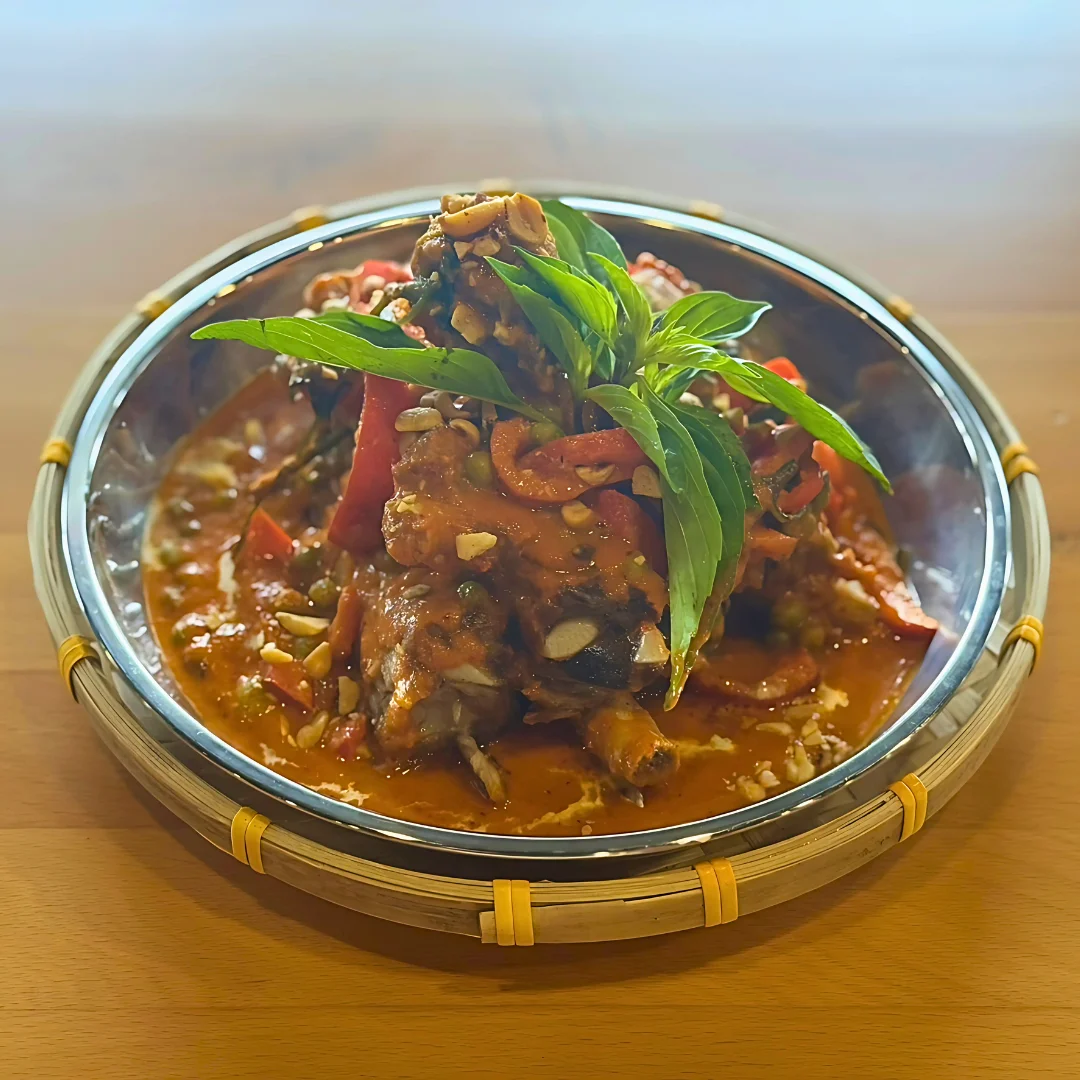
A bowl of green curry can be creamy, sweet, and fragrant with basil.
A Lao-style curry or stew may arrive more earthy and herbal, with dill, bamboo shoots, eggplant,
and a savory depth that stays with you long after the first bite.
That contrast is at the heart of Thai curry vs Lao curry: these are neighboring food traditions with shared ingredients,
but they speak in different flavor languages.
For diners who know Thai curries and want to explore Lao food, the difference can be an easy and delicious starting point. Both cuisines welcome heat, herbs, rice, and communal eating. The details - the broth, the seasoning, the texture, and the role of fresh ingredients - create two distinct experiences.
Thai Curry vs Lao Curry: The Big Difference
Thai curries are often recognized by their colorful curry pastes and smooth coconut-based sauces.
Red, green, yellow, Panang, and Massaman curries each have their own character,
but many follow a familiar balance of chili heat, aromatics, coconut milk, fish sauce, and a touch of sweetness.
They are built to be aromatic, layered, and comforting, especially over steamed jasmine rice.
Lao curries are less likely to fit into one neat set of categories.
Lao cooking is deeply regional and seasonal, and many dishes that a US diner
might call curry are closer to soups, stews, or herb-rich broths.
Coconut milk can appear, but it is not always the center of the dish.
Instead, Lao flavors often lean into fresh herbs, roasted ingredients, vegetables, chiles, tamarind, and fermented seasonings.
The simplest way to put it is this: Thai curry often leads with a polished, blended sauce,
while Lao curry often lets individual herbs, vegetables, and savory ingredients stay more visible in every spoonful.
Neither approach is better. It depends on whether you are craving creamy richness or a more rustic, deeply herbal bowl.
Coconut Milk Is Common in Thai Curry, Not Required in Lao Cooking
Coconut milk is one of the first things many Americans associate with Thai curry. In green curry,
it softens fresh green chiles and bright herbs. In red curry, it gives body to dried chiles and warm spices.
In Panang curry, it creates a thicker, almost velvety texture that clings to meat or tofu.
That association is real, but Thai cuisine also has curries and curry-like dishes made with broth rather than coconut milk.
Thai cooking is far more varied than a single creamy sauce.
The same is true for Laos, where coconut milk may be used in some dishes but does not define the cuisine.
Lao food frequently finds richness through other paths:
roasted chiles, toasted rice powder, meat stock, vegetables, and fermented fish seasoning.
A dish can feel full and satisfying without being creamy.
For a diner deciding what to order, this difference matters. If you want a mellow sauce that rounds out spice,
a Thai coconut curry is often a reliable choice. If you want something more savory, green, and herb-driven,
Lao dishes can offer a different kind of comfort.
The Seasonings Tell a Cultural Story
Thai and Lao cuisines share ingredients such as lemongrass, galangal, makrut lime leaf, chiles, fish sauce, garlic, and shallots.
These flavors travel across borders because food traditions, families, and markets have always moved across the region.
Still, the combinations and proportions differ.
Thai curry pastes are typically pounded or blended from aromatics, chiles, and roots, then cooked until fragrant before liquid is added.
The result is a sauce where many ingredients become one unified flavor.
Thai curries often aim for a lively balance of salty, sweet, spicy, sour, and creamy notes.
Lao cooking is especially known for its use of fresh herbs and for padaek, a traditional fermented fish seasoning.
Padaek has a deeper, more rustic fermented character than the clear fish sauce many diners recognize from Thai food.
It is powerful, savory, and essential to many Lao dishes when used in the right amount.
It can give broths, salads, and cooked dishes an unmistakable depth.
That does not mean every Lao dish tastes strongly fermented, or that every Thai dish tastes sweet.
Recipes vary by household, region, and cook. But the general contrast is useful:
Thai curries often feel more rounded and sauce-forward, while Lao dishes can taste more direct, earthy, and herbaceous.
Texture Matters as Much as Heat
When people compare Thai curry vs Lao curry, they often focus only on spice level. Heat matters, but texture can be the bigger surprise.
Thai curries commonly have a smooth sauce surrounding pieces of chicken, beef, shrimp, tofu, or vegetables.
The sauce is meant to be spooned over rice, so every bite carries the curry's flavor.
Ingredients are usually tender but still distinct, and garnishes such as Thai basil add a final lift.
Lao curry-style dishes and stews may be thinner, more brothy, or more textured. Bamboo shoots, greens, mushrooms, eggplant, herbs, and proteins can play equally important roles. Some dishes use toasted rice powder for a subtle nutty texture, while others rely on vegetables and herbs for body. Instead of one uniform sauce, you may get changing bites: a bright herb here, a smoky chile there, a savory broth underneath.
Sticky rice also shapes the Lao dining experience. It is not merely a side dish. A small ball of sticky rice can be used to gather food, soften spicy bites, and make a meal feel shared. Jasmine rice pairs beautifully with Thai curry, while sticky rice is often the natural companion to Lao flavors.
Familiar Thai Curries and Lao Flavors Worth Trying
If Thai curry is already part of your regular takeout order, use it as a reference point rather than a limit. Green curry is a good choice for diners who enjoy fresh chile flavor, basil, and coconut milk. Red curry tends to bring a deeper chile profile, while Panang is usually richer and thicker. Massaman often feels milder and warmer, with spices that make it especially comforting.
For Lao food, look beyond the expectation of a classic curry sauce. A bamboo shoot soup or stew can bring a savory, herbal, slightly tangy profile. Dishes featuring dill, lemongrass, eggplant, or roasted chiles offer a strong introduction to Lao flavor. Papaya salad, known for its bright chile, lime, and savory seasoning, also makes an excellent contrast alongside a richer curry.
At Eat A Lao, the menu is designed for that kind of discovery: familiar Southeast Asian favorites alongside Lao dishes that invite you to taste a different side of the region. You do not need to choose one cuisine forever. Ordering a Thai curry with a Lao salad, soup, or shared side can make the table more interesting.
How to Order Based on What You Crave
Choose Thai curry when you want a comforting, saucy meal with coconut richness and a clear balance of spice and sweetness. It is especially easy to enjoy as a complete meal over rice, whether you prefer chicken, beef, shrimp, vegetables, or tofu.
Choose Lao-style dishes when you want bolder herbs, savory depth, and more texture.
If you enjoy lemongrass, bamboo shoots, fresh greens, fermented flavors, or spicy salads, Lao food offers plenty to explore.
Ask about the spice level if you are newer to the cuisine.
Many dishes can be adjusted, but the goal is not simply to make food hot. It is to keep the flavors in balance.
For a family meal or a group order, combining both traditions works beautifully.
A creamy Thai curry can calm the heat of a bright Lao salad,
while sticky rice and jasmine rice give everyone a way to enjoy the meal at their own pace.
The best order is the one that meets you where you are. Start with the curry you already love,
then add one Lao dish that feels new but approachable.
That one extra taste may become the part of the meal you remember most.

